
Volunteering in Rockaway, Queens after Hurricane Sandy
November 11, 2012 § Leave a comment
I have been a field nurse in nyc for many years, and have a lot of experience conducting assessments in both the MCD/MCR and private pay populations, but have never seen NYC like this before. The main concerns post Sandy are the following: relocation assistance; providing temporary housing with heat and hot water, as some will be without power until after Christmas and until after every house in the neighborhood can be inspected, medication management (many have Diabetes, Hypertension and pacemakers) and need dry ice and a cooler to store insulin, the risk for respiratory illness from inhaling fiberglass particles and mold, heavy duty cleaning (the stench from the growth of mold in homes where the water rose waist to neck high on the first floors), Tetanus, Pneumonia and Influenza vaccinations, care with appliances in the event there are any gas leaks, possible electrocution from downed power lines, trash removal (garbage, debris, and damaged belongings are piled sky high), financial assistance with mortgages, insurance aide, employment assistance (many unemployed as a result of their employer also being affected by storm damages), safety and security as we set our clocks back recently, therefore, it gets dark out earlier, increasing the potential chance for looting, and the need for flashlights and batteries. Food, water and clothing don’t seem to be too much of a concern as there is a fairly strong military presence handing out aide. All things considered, there is a strong sense of community, faith and high spirits. Amazing and very impressive.
Article by Sharon Abella
REMINDERS
*Never touch downed power lines, and always assume that any fallen lines are live electric wires. If you see one, report it immediately to National Grid or your local emergency-response organization.
* If you use a generator to supply power during an outage, be sure to only operate it outdoors. Before operating generators, be sure to disconnect from National Grid’s system by shutting off the main breaker located in the electric service panel. Failure to do this could jeopardize crew safety.
* If you lose power, turn off any appliances that were on when the power went off, but leave one light on so you will know when power is restored.
* Power problems can sometimes interrupt public water supply systems or disable well pumps, so it’s an especially good idea to keep a supply of bottled drinking water handy, as well as some canned food.
* People who depend on electric-powered life-support equipment, such as a respirator, should let National Grid know. To register as a life-support customer, call the company’s Customer Service Center at 1-800-322-3223.
* Check on elderly family members, neighbors and others who may need assistance during an outage period.
* Prepare an emergency supply kit, which includes items like nonperishable food, water, a battery-powered or hand-crank radio, extra flashlights and batteries, medications, and essential baby items. You may want to prepare a portable kit and keep it in your car in case you are told to evacuate.
* Turn your refrigerator thermostat to its coldest setting and keep its doors closed.
* Turn off propane tanks. Avoid using the phone except for serious emergencies.
Radioman, Article by Sharon Abella, www.1worldcinema.com
November 10, 2012 § Leave a comment
Wow, it felt so nice to laugh after 2 weeks of doom and gloom. This is a true rags to emotional riches story as you watch a man with a gimmick (his radio), go from homeless to Hollywood.
With over 100 background rolls in top grossing films, the muse for “The Fisher King,” and being the guest of A-list actors to “The Academy Awards,” Radioman, has proven that by being in the right place at the right time, by putting yourself out there, by working hard and following your passion, by being resourceful, and having low overhead, that you CAN make it in Hollywood!
“Keeping it real with Radioman.”~Robin Williams “There is the ‘Empire State Building,’ “Statue of Liberty,’ and ‘Radioman.’~Joel Schumacher. “He knows our schedule before we do.”~Shia LaBeouf
Q: Are you in character when you are Radioman?
A: Radioman: “I guess it is a character, but I am being me. I’m me. I am Radioman. Is it a character? I am what I am. I always wanted to be part of the movies. My mom liked the movies and wanted to be a model, so I guess that is where my interest came from.”
Q: Are you homeless?
A: “I am not homeless. I used to be, but I am not anymore. I have an apartment in Brooklyn where I keep all my sacred movie memorabilia. When you are homeless you are invisible. It is an abyss you can’t get out of. It is a very lonely, dismal way of living. I was a mail handler at the post office, but I bought beer with the money. When all the money ran out, I wound up on the street and slept beneath the tracks in Penn Station. One day, about 15 years ago, I gave it up cold turkey, and have not had a sip of alcohol since then.”
Q: What was your favorite role?
A: “I have appeared in Spiderman, 2 Weeks Notice, Enchanted, Snake Eyes, Godzilla, Wall Street 2, but I really loved working on Shutter Island. I would really like to get some lines.”
For more from Radioman, click on the Q & A below. Endearingly laugh your heart out along with the cute, fuzzy, and good natured, New York and Hollywood icon, Radioman, who has proven time and time again, that “80 percent of success is just showing up.” NY Radio DJ LEGEND, Pat St. John, in attendance at the DOC NYC screening to show his love and support for his friend, “RADIOMAN.”
Film appearances by Tom Hanks, Josh Brolin, George Clooney, Robin Williams, Sting, Johnny Depp, Paul Giamatti, Helen Mirren, Meryl Streep, Whoopi Goldberg, and Eva Mendes.
“80 percent of success is just showing up” — Woody Allen

Article by Sharon Abella
Racing The Planet, Article by Sharon Abella, www.1worldcinema.com
October 24, 2012 § Leave a comment
140 competitors from 36 countries will set out on a life changing journey this Sunday, October 28, 2012 as the eighth edition of the world-renowned Sahara Race returns. These brave souls will travel 250km on foot over 7 Days in Egypt’s protected Wadi Al-Hitan region in the world’s largest hot desert, and the second largest desert after Antarctica, The Sahara Desert, with their food, clothing and supplies in their backpacks, and only tents and water will be provided along the way.
“We are incredibly excited to return to the great Sahara Desert in Egypt for the eighth time, and are proud to have so many nationalities represented with large contingents from the Asian nations including Korea, Japan and China,” said Samantha Fanshawe, Vice President of Events for RacingThePlanet. “We are also excited to see growing numbers of Egyptians participating. We look forward to again working with the Ministry of Tourism to stage another successful event.”
Among the frontrunners expected to dominate the race are Vicente Juan Garcia Beneito of Spain, a 36-year-old firefighter who has put in an amazing performance in the 4 Deserts series this year, winning the Atacama Crossing in Chile and the Gobi March in China. He is matched in the women’s division by Germany’s Anne-Marie Flammersfeld, who also aims to take her third consecutive 4 Deserts medal in 2012.
This speaks of an impressive group of 19 competitors who are taking on the 4 Deserts Grand Slam in 2012: all 4 Deserts races in one calendar year. The Grand Slammers are showing physical strength and mental agility as they move into the third stage of their quest to complete a total of 1,000-kilometers across the world’s most extreme desert landscapes—from the high altitudes of Chile’s Atacama Desert, to the remote sands of China’s Gobi Desert and finishing amid the epic setting of Antarctica in November.
The Sahara Race has also drawn a large number of newcomers with remarkable life stories. Canada‘s Sebastien Sasseville is a Type 1 Diabetic who has scaled Mount Everest, completed four Ironman triathlons and is here to raise funds and awareness for the disease. Japan’s ‘fastest comedian,’ Yashuhito Wakita, also takes on the feat for the first time, with an entire film crew from NHK, Japan’s National Broadcasting Organization following his footsteps. The field is extremely diverse with students, doctors, bankers, chefs and homemakers alike sharing a dream to conquer this legendary desert.
The race begins on Sunday morning and traverses the UNESCO World Heritage Site of Wadi El Hitan, southwest of Cairo. Special permission has been obtained to allow competitors to move through this celebrated paleontological site, where large whale skeletons from ancient times still lie on the sands. After spending six days pushing through a course of sand dunes, desert oases and stony expanses, competitors finish on Saturday, November 3, 2012 amid the impressive backdrop of the Pyramids of Giza.
Racing The Planet, Sahara Desert Race
God bless all those running regardless of race, creed, color, or national origin!
Sharon Abella
“The Antarctica Challenge: A Global Warning”
October 24, 2012 § Leave a comment
I have been promoting this film for over 2 years.
‘Antarctica Challenge: A Global Warning’
Antarctica is one of the most undiscovered continents on Earth. As global warming progresses, the added water from the accelerating melting of Antarctica’s land ice will cause a rise in the world’s sea levels, placing added pressure on the Earth’s surface, ultimately leading to more flooding, earthquakes and tsunami’s. Cities near coasts will have to be built differently with more flood mechanisms. There will be major problems, and some scientists believe we are too late by twenty years.
Scientists report there will be a rise in temperature of 2 degrees over the next 100 years. This rise hinders the ability for krill, the primary food supply of penguins and all Antarctic life, to reproduce. If krill move out of the area, the penguins will have to find another food supply, and only species that are able to adapt will survive.
The documentary also discusses new life growing in places where it has never previously been before.
Is the ozone hole beyond repair? Is global warming irreversible?
Must see.
Sharon Abella
“The Rolling Stones: Charlie is my Darling”
October 1, 2012 § Leave a comment
An intimate, behind the scenes look at life on the road of “The Rolling Stones” before they became a legend. Watch as they tour around Ireland in 1965.
1965: Brian Jones: “Let’s face it; the future as a Rolling Stone is very uncertain.”
2012: “The Rolling Stones'” latest song about class tensions and fracking.
Article by Sharon Abella
“The Avett Brothers,” “The Lumineers,” “The Wood Brothers,” “Yeasayer,” “Fleet Foxes,” “Animal Collective,” “Two Door Cinema Club,” “Johnny Flynn,””Mumford and Sons,” & “PSY” Music selections by Sharon Abella, www.1worldcinema.com
September 29, 2012 § Leave a comment
“Interview with “The Avett Brothers”
Music selections by Sharon Abella, Editor of http://www.1worldcinema.com
5th Annual New York Surf Film Festival, Explore the Diversity of Surfing, Sept 19 and 20th, 2012
September 21, 2012 § Leave a comment
Films entitled, “Dear Suburbia,” “European Surf Journal,” “Gauchos Del Mar,” “Here and Now,” “Jaws ‘Changing the Game,'””Promised Land,” “Raw the Movie,” “Sebastian Beach One Fine Day,” “Surfing and Sharks,” “The Africa Project,” “The Find Claiming Nelscott Reef,” “This Time Tomorrow,” “Through the Whisky Barrel,” “30 Days Without Surfing,” “Away,” “Bernie and Ges,” “Fathoms Left to Fall,” “Free Aloha,” “Follow the Sun,” “Itxasoa,” “Kook Paradise,” “Margaux,” “Montauk Documentary, “Simon Anderson,” “Stacked,” “Upcycling,” “Water Warriors,” “WindanSea,” “Wright Side of Wrong,” “and “You Look Swell” have shown at the Nitehawk Cinema in Williamsburg, Brooklyn over the past 2 days.
“Surfing for Peace” Can surfing bring about peace on Earth? In “Promised Land,” you will learn all about the impact the sport has had on the Israeli state, and the hope of what could be if everyone were to spend quality time with people from different cultures, in the water, “because when you are a surfer, you are not a country or a religion, you are a surfer. It doesn’t matter if you are in Israel, Europe, or America, you are just happy to surf and get good vibes.”
Geographically located near Arab nations, with a past and present deep in conflict, Jews in Israel have always felt as if they have to fight for their everyday existence. “Promised Land” tries to soften the tensions in the Mid-East by describing a little bit about the often misunderstood Jewish population, explaining that “shaping a surfboard is a good metaphor for how the Jewish people really are. Hard as a shell from the outside, but once you get to know them, gentile, with a very kind and big heart.”
Todd Morehead, the director of “Promised Land,” dreamt of becoming a pro-surfer, however, when those dreams faded, he decided to put Christian ministry work, and his love for surfing, together in Israel. He and his wife refurbished b-mb shelters, while trying to make surfing more popular. The hope is that by getting people to go surfing, they won’t think about wars or their country’s problems.
Knowing that waves and war do not mix, Dr. Dorian Paskowitz, traveled over the Israeli border to Gaza, bringing with him 14 surfboards to give to Palestinians. This wise sage explained that “when a man steps into the ocean, there is only one enemy, and that is himself. You are one with the water, one with the wave.”
Appearances by Tom Curren and Al Merrick.
Article by Sharon Abella

Interview: Danielle Tosi, MD, Expedition Medicine MD and Female Polo Player. Exclusive: One World Cinema
September 6, 2012 § Leave a comment
Q: Sharon Abella, RN: What is your educational background? How did you become involved in expedition medicine?
A: Danielle Tosi, MD: I attended boarding school at Choate Rosemary Hall, and by graduation, had the interest and confidence to travel internationally, independently. At Georgetown University in Washington, D.C. I developed educated awareness and experience in global politics, philanthropy, and international travel, and completed Pre – Medical requirements. Having traveled and studied in Asia and Europe, and being athletically inclined, I envisioned combining international travel, sports, science, and humanitarianism, with a career as a medical doctor.
By completion of Anesthesiology Residency at Columbia University, I was experienced in expedition medicine. With preparedness to handle medical situations in my travels, I had sailed from South Carolina to Venezuela and Gibraltar to Sicily, canoed on the Amazon River staying in villages in the jungle, volunteered in hospitals in the Caribbean, and trekked on horseback in South Africa. Since that time, I developed my career as an anesthesiologist, expedition doctor, and humanitarian. Based in New York City, I travel for international humanitarian medical missions, exploration and adventure, preferably involving sailing, surfing and horseback trekking.
Q: Sharon Abella, RN: Define Expedition Medicine:
A: Danielle Tosi, MD: Expeditions for pupose of humanitarian work, scientific research, and exploration, that are away from access to organized healthcare in areas of potential hazards usually take a medical professional. A doctor on an expedition has three roles: to provide medical care, cope with any medical eventuality without the ability to obtain additional help or supplies, to be a “team member” playing a full role in the expedition aims and providing psychological benefit to the expedition.
A doctor traveling in remote areas with animals such as horses or dogs is also expected to have basic veterinary knowledge and preparedness. It is this diversity of practice and this intersection of medicine and nature that draws individuals to expedition medicine.
Q: Sharon Abella, RN: What countries have you worked as an Expedition Doctor in? What were some of the challenges and rewards?
A: Danielle Tosi, MD: Countries I traveled in as an Expedition Doctor include:
Ethiopia, Morocco, Kenya, South Africa
Jordan
India
China
Cambodia
Eastern Caribbean, Haiti
Venezuela
French Polynesia, Republic of Indonesia

I volunteer on humanitarian missions for Non Governmental Organizations in underdeveloped countries providing anesthesia for surgery to children. To this time, I have provided anesthesia for surgery to more than 300 children in underdeveloped nations, volunteered in a United Nations IDP camp hospital, and worked with the US military on a surgical mission to benefit children living in a war zone. I also took responsibility as a doctor on boating, surfing and horseback trekking trips in remote ocean- wilderness areas. In addition to experiencing various challenging aspects of practicing medicine in the hospitals, ocean and wilderness of these underdeveloped nations, I faced personal challenges in my journeys. For example, I was charged at close range by elephants and a rhinoceros while horseback trekking in Africa, experienced hurricane conditions and seasickness while on the helm of a 50’ sailboat 1000 miles from the East Coast of US in the Atlantic Ocean, slept in a hammock in a hut in the Amazon jungle knowing that a snake bite could be deadly and awakening to mosquito netting completely covered in insects the size of birds, and medically treated myself in isolated situations without other access to care when stricken with illnesses such as ‘food poisoning’ and high altitude sickness (different occasions) in Africa.
Q: Sharon Abella, RN: What has been your most rewarding experience working as an expedition MD?
A: Danielle Tosi, MD: I have had many tremendously gratifying experiences for example:
I worked in a hospital in the desert of Jordan, near the border of Iraq on a humanitarian mission with Operation Smile and the US Military during the Iraq war, providing anesthesia for children from Baghdad to have surgery.
Working as MD for Jenkins/Penn Foundation in Haiti UN Refugee Camp hospital after the earthquake, during outbreak of the cholera epidemic.
It is personally rewarding to accomplish a humanitarian mission under the challenging circumstances of practicing medicine in extreme and remote environments of underdeveloped countries. The work is especially gratifying because it is purely motivated out of humanitarianism and interest, not for profit.
Q: Sharon Abella, RN: What supplies are needed?
A: Danielle Tosi, MD: The medical role includes medical preparedness by choosing medical supplies and equipment for health screening and diagnosis and treatment of any injury or disease that occurs on the trip.
Q: Sharon Abella, RN: Do you ever have to improvise without the necessary supplies?
A: Danielle Tosi, MD: One of the keys to success in expedition medicine is a doctor’s ability to improvise with supplies and equipment. Improvising allows a doctor to reduce the load of equipment to carry, or to treat an unexpected injuries. Improvised solutions are not definitive treatments but are adequate. The point is to plan ahead to be prepared with the right equipment and use it, and to be prepared to improvise using the supplies available when you don’t have the ideal equipment.
From experience of practicing medicine in underdeveloped countries and remote situations, one learns to adapt to the environment and use what is available to provide the best standard of care possible.
Q: Sharon Abella, RN: Have you thought about working on a film set?
A: Danielle Tosi, MD: TV, film, and movie projects are getting more adventurous and travel to more remote environments. In these circumstances it is important to have a medical professional on site. Many locations do not have medical facilities and an expedition doctor equipped with the latest mobile medical kit and satellite communication can provide the peace of mind to allow a film crew to focus on the production of their project. An expedition doctor provides support, assistance and ensures safety in the outdoor activities of a film crew in the world’s most remote locations.
SHARON ABELLA: Q: How did you get involved in playing Polo?
A: Danielle Tosi: I got involved playing polo in Hawaii on the Northshore of Oahu where I have a home. I have always loved horses and riding and several years ago, I started taking polo lessons at Hawaii Polo Club. Soon after my first lessons, I leased and purchased polo ponies so I could practice and play in games there. After learning to play in Hawaii, I extended my polo experience to the East Coast where I have horses and play in the Hamptons and Palm Beach. I’ve also experienced playing polo in Argentina.
Q: Sharon Abella: Why do you prefer to play in mixed tournaments vs. ladies only?
A: Danielle Tosi: To assemble a team and then compete in a series of tournaments requires relationships with professional players, grooms, vets, and farriers. Most professional polo players with an established business on the level of training and providing horses for sale and use in matches, and training the amateur sponsor or “patron” to play are men. The professional polo players I most enjoy playing with are the same men who, over the years, have trained me and my horses, to play. It is preferable to play mixed tournaments with those professionals because we have developed rhythm and strategy that gives me more confidence in and enjoyment of competing in the polo matches. I enjoy playing ladies polo, but my experience has been limited due to the fact that most tournaments are mixed and the ladies tournaments are occasional in various locations across the US so logistically more difficult requiring travel with horses. Ladies polo is a fast growing sector of polo, however, the sport is still dominated by men. There are not many professional women polo players and the highest rated female today is 5 goals, yet there are many men rated with high goal handicaps.
Q: Sharon Abella: What obstacles did you face as a female getting into polo?
A: Danielle Tosi: Initially I faced and overcame obstacles as a female trying to start playing the US Polo Association matches at Hawaii Polo Club. This is because when I started playing there it was a small club consisting of all men , very experienced, good, aggressively competitive and playing fast. So, of course, they did not cater to me on the field, because I am a lady. When I developed the confidence that I played well enough to join in their games, I had to convince them to allow me to enter tournament level matches because they “don’t want to see you get hurt.”
Polo has inherent risks of traveling at fast speeds on a horse and physical contact with other horses and players, and is considered to be one of the most dangerous sports int he world. It’s a battle on the field with the players of a team strategizing, riding, and playing hard against their opponents to win.
Q: Sharon Abella: What position on the team has the most responsibility?
A: Danielle Tosi: There are four mounted players on a polo team each referred to as Numbers One through Four. Each position has a different responsibility on the field so that all the team participates and so there is a method and strategy for anticipating what happens in a game. All positions relate to responsibility of where to be on the field, what to do on offense to make plays for the team, how to apply and maximize speed, when to defend, and what to do on defense.
Q: Sharon Abella: Tell us a little bit about the history of the sport and do you think it will ever gain in popularity?
A: Danielle Tosi: Polo originated in Persia in ~600BC, developed to the modern game in India, Britian and Argentina, and arrived in the US 136 years ago. It was an Olympic sport from 1900-1939. During the ‘20’s and 30’s in America, polo drew large crowds with some matches up to 30,000 spectators and the US was considered the best in the world. Today polo is played in over 70 countries, there are polo clubs all over the U.S. and teams of 36 Universities and matches are again drawing large crowds. Polo is definitely gaining in popularity.
Q: Sharon Abella: What is your most memorable experience?
A: Danielle Tosi: My most memorable experience playing polo was playing at La Dolfina in Argentina.
Q: Sharon Abella: What personality traits are needed to play Polo?
A: Danielle Tosi: Capable, Intelligent, Quick-Thinking, Team Player, Valiant, Risk Taker, Courageous, Competitive, Optimistic, Confident, Reliable, Trusting.
Q: What traits do you look for in a polo pony?
A: Danielle Tosi: Traits I look for in a polo pony: athleticism, good conformation, intelligence and good temperament (“heart” to play polo); thoroughbred with endurance for the rigorous game of polo.
Q: Sharon Abella: What is your biggest obstacle while playing?
A: Danielle Tosi: The “CAUTION” sign in my mind. Embracing risk requires understanding and accepting the challenges of playing polo, and working as an expedition doctor, in an uncertain hazardous environment. To successfully ride out any hazards requires ability to embrace risk and uncertainty and channel energy into productive actions.
Q: Sharon Abella: Are there any films that remind you of Polo?
A: Danielle Tosi: There is no Polo in film I am aware of, but it would be great to see polo on film with modern technology. Considering this, films that remind me of polo are war films demonstrating man’s connection with horses and the athleticism, courage and heart of men and horses in battle together. Scenes from “Avatar” showing physical and mental connection with animals in playful competition and battle, also reminds me of polo. In the sport of polo, the horses are the main athletes, there is communication where both minds and bodies of both players and horses are working in sync very fast and there is an exhilaration of “flying” on an animal to accomplish goals and sharing that with others in both playful and serious competitions.
“Of Kings and Cowboys” (A romance story and based on polo, which is currently looking for investors)
“War Horse”
“Last Samurai”
“Avatar”
Thank you to Danielle Tosi, MD
Article by Sharon Abella
Editor: http://www.1worldcinema.com
“Samsara” means Continuous Flow, Article by Sharon Abella, Editor: www.1worldcinema.com
August 31, 2012 § Leave a comment
“Samsāra or Sangsāra (Sanskrit: संसार) (in Tibetan called “khorwa”),[1] literally meaning “continuous flow”, is the repeating cycle of birth, life, death and rebirth (reincarnation) within Hinduism, Buddhism, Bön, Jainism, Yoga and Sikhism.”-Wikipedia.
Travel on a meditational and spiritual journey to 25 countries, and 100 locations, shot over 5 years on 70mm film. Entrance yourself in colorful kaleidoscopic images of culture, religion, and nature, all without words, only music. Explore fairytale like temples, sand drawings, cathedrals, stained glass, national parks, waterfalls, active volcanoes, deserts, tribal dancers, soldiers, mosques, pyramids, the “Wailing Wall,” Hadj, baptisms, the world’s tallest building, poor suburbs, shanty towns and slums, corporate cubicles, busy freeways, and factories in Jordan, Israel, Japan, the Philippines, Turkey, France, Italy, India, Mali, Indonesia, Myanmar, Saudi Arabia, the United Arab Emirates, Angola, Bhutan, Ghana, Thailand, California, Utah, Arizona, and Hawaii. See how many places and events you can name. It’s definitely worth seeing 5 years of hard work in 102 minutes.
Photos compliments of Oscilloscope Films.
Article by Sharon Abella
Editor
My Tribute to Irish Cinema. Music and Movie Selections by Sharon Abella, Editor of One World Cinema
August 22, 2012 § Leave a comment
The lyrics to the “U2” songs correlates to the storyline of the films. Click on the links below the movie posters to watch the videos.
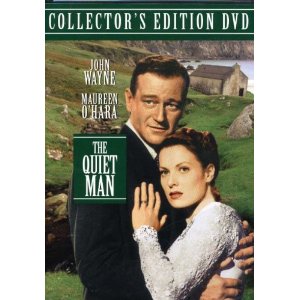
“The Quiet Man”/”Sometimes You Can’t Make It On Your Own”
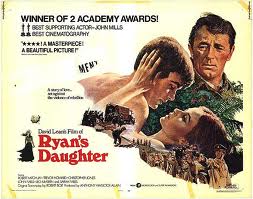
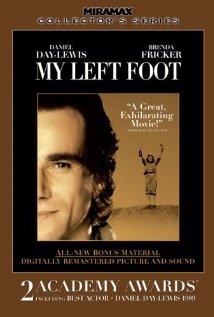
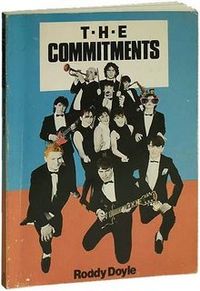
“The Commitments”/”Stuck In A Moment”
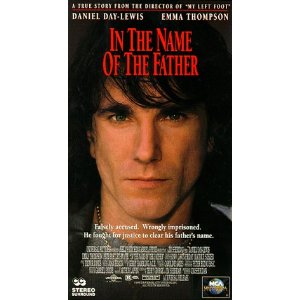
“In The Name of The Father”/”Sunday Bloody Sunday”
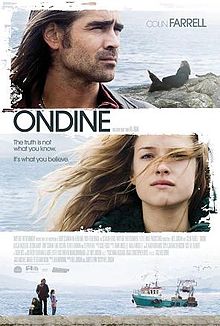
Music and movie selections by Sharon Abella.
Editor of One World Cinema
 One World Cinema